The Most Famous Gorillas in History | Famous Mountain Gorillas
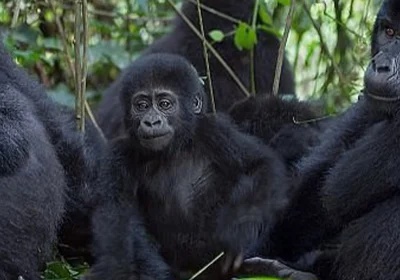
Mountain gorillas have fascinated the world for generations.
Their intelligence, powerful presence, gentle nature, and remarkably human-like family relationships have made them among the most captivating animals on Earth. But some gorillas became famous for another reason.
Their individual stories helped change how people understand, protect, and connect with gorillas. From Digit, the beloved mountain gorilla studied by Dian Fossey, to gorillas that became symbols of conservation around the world, these extraordinary animals have left a lasting mark on history.
Digit — Dian Fossey’s Most Famous Gorilla
Dian Fossey’s Most Famous Gorilla
Few gorillas are as closely associated with conservation history as Digit.
Digit was a mountain gorilla who became particularly important in the life and work of Dian Fossey at the Karisoke Research Center in Rwanda.
Fossey first encountered Digit when he was young and developed a strong bond with him.
Digit became one of the gorillas Fossey observed closely while documenting the social lives and personalities of mountain gorillas.
His story later became an important part of the public understanding of the threats facing gorillas.
Digit was killed by poachers in 1977 while defending his family.
His death deeply affected Fossey and helped intensify her campaign against gorilla poaching. The tragedy also inspired the creation of the Digit Fund, which later became part of the organization now known as the Dian Fossey Gorilla Fund
Epic Gorilla Trekking
For those dreaming of waking up surrounded by Rwanda’s volcanic landscapes before heading into the forest to encounter mountain gorillas, Amarembo offers a compelling place to begin that journey.
Head Office
Sarit Gorilla Safaris Limited. Boston St, Salaama Road, Kampala, Uganda
Cantsbee — A Gorilla Known Around the World
Cantsbee became one of the best-known mountain gorillas associated with the long-term research conducted in Rwanda.
He was born into the Pablo group, one of the most extensively studied gorilla groups in the world.
The Pablo group became particularly important to researchers because generations of scientists were able to observe its members over many years.
Cantsbee’s life provided researchers with valuable insight into gorilla social behavior, family relationships, leadership, and movement between groups. His story demonstrates why long-term gorilla research is so important.
Titus — The Legendary Silverback
Titus became one of the most famous mountain gorillas ever studied.
Born in Rwanda’s Virunga Mountains, Titus was observed for decades and became the subject of extensive scientific research.
His life was remarkable because researchers followed his development from infancy into adulthood and watched him become a dominant silverback.
Titus experienced complex relationships, changing alliances, competition, family movements, and leadership struggles.
His life was later documented in the BBC documentary Titus: The Gorilla King.
Titus became an important example of how gorilla societies can be complex, competitive, emotional, and surprisingly similar to human social structures.
Papoose — A Symbol of Gorilla Family Life
Papoose became known through the long-term observations of mountain gorillas in the Virunga region.
Like many gorillas studied by researchers, Papoose’s story helped scientists understand the importance of family groups and social bonds.
Young gorillas spend years learning from older members of their group.
They play together, travel with their mothers, interact with siblings, and gradually learn the complex social rules of gorilla society.
These observations have helped transform the way people think about great apes.
Our Most Popular Sustainable Gorilla Safaris
Login to use
Login to use
Login to use
Login to use
14 Days Botswana & Uganda Luxury Wildlife & Gorilla Safari
Duration
Group size
Login to use
7 Days Uganda Gorilla & Big Five Safari – Queen Elizabeth
Duration
Group size
Login to use
Login to use
Koko — The Gorilla Who Captivated the World
When discussing famous gorillas, it is impossible to leave out Koko.
Unlike Digit and Titus, Koko was not a mountain gorilla living in the forests of Rwanda.
She was a western lowland gorilla who became internationally famous through research involving communication and sign language.
Koko was born in 1971 and was raised under human care in California.
She became widely known for her reported ability to use modified American Sign Language and communicate with humans.
Her story sparked enormous global interest in gorilla intelligence, emotions, communication, and cognition.
Although scientific interpretations of her communication abilities remain debated, Koko unquestionably changed public perceptions of gorillas.
Ndjia — A Gorilla with a Conservation Story
Every mountain gorilla has a story, but some become particularly important to conservationists because researchers follow them over many years.
Gorillas such as Ndjia have contributed to the enormous body of knowledge collected through long-term monitoring of gorilla populations.
Researchers can use individual histories to understand population health, family structures, reproduction, behavior, and threats.
This individual-based approach remains an essential part of mountain gorilla conservation.
Harambe — A Gorilla Remembered Around the World
Harambe became one of the most recognizable gorillas of the modern era.
He was a western lowland gorilla living at Cincinnati Zoo.
In 2016, Harambe was killed after a young child entered his enclosure.
The incident generated enormous international attention and debate about zoo management, wildlife conservation, animal welfare, and human responsibility.
Although Harambe was not a mountain gorilla, his story brought unprecedented global attention to gorillas and the challenges involved in caring for great apes in captivity.
His name remains widely recognized around the world.
Stay at Amarembo by Touch Down near Volcanoes National Park and experience luxury, Rwandan culture, mountain gorillas, and stunning Virunga views.
Why Are Some Gorillas More Famous Than Others?
Gorillas become famous for different reasons.
Some are connected to groundbreaking scientific research.
Others become important because of conservation events.
Some become famous through documentaries, books, photographs, or international news.
And others simply develop remarkable personalities that capture the attention of the people who study them.
But there is something important behind every famous gorilla story:
individual gorillas matter.
They are not simply members of a species.
They have recognizable personalities, family relationships, social positions, and individual life histories.
Dian Fossey and the Gorillas That Changed Conservation
The story of famous mountain gorillas cannot be separated from Dian Fossey.
Her pioneering research in Rwanda helped demonstrate that gorillas were intelligent and highly social animals deserving of protection.
Fossey spent years observing individual gorillas and learning to recognize their unique personalities.
Her book, Gorillas in the Mist, introduced her work to millions of people around the world.
Her research also helped create a stronger international conservation movement around mountain gorillas.
Why Gorilla Names Matter
Naming individual gorillas has played an important role in scientific research and conservation storytelling.
When researchers identify individual animals, they can monitor their health, family relationships, reproduction, movements, and behavior over time.
This allows conservationists to build detailed histories of gorilla families.
For travelers, learning these individual stories can also make a gorilla trekking experience more meaningful.
Instead of simply seeing “a gorilla,” visitors may encounter a family with its own history, relationships, personalities, and generations.
Famous Gorillas and Modern Gorilla Trekking
Today, travelers can experience the world that inspired many of these conservation stories.
Mountain gorilla trekking is possible in carefully protected habitats in Uganda and Rwanda, with gorilla conservation supported through tourism, research, habitat protection, and community initiatives.
In Uganda, travelers can trek through Bwindi Impenetrable National Park and Mgahinga Gorilla National Park.
In Rwanda, Volcanoes National Park protects part of the Virunga Mountain ecosystem.
A gorilla trek is an opportunity to observe these extraordinary animals in their natural environment while contributing to a conservation economy that helps protect their habitat.
The stories of Digit, Titus, Cantsbee, Koko, Harambe, and countless other gorillas remind us that conservation is ultimately about individual lives.
Each gorilla represents more than a photograph.
Each represents a family, a community, an ecosystem, and a future.
The most famous gorillas in history have helped millions of people see these animals differently.
They have shown us their intelligence, their emotions, their strength, their vulnerability, and their extraordinary social lives.
And perhaps their greatest legacy is this:
When people know the story of an animal, they are more likely to care about its future.
Frequently Asked Questions
Have more questions? Contact us.
Who is the most famous gorilla in history?
There is no single universally recognized answer, but Digit, Titus, Koko, and Harambe are among the gorillas whose stories have attracted enormous international attention.
Who was Digit the gorilla?
Digit was a mountain gorilla studied by Dian Fossey in Rwanda. He became an important figure in the history of gorilla conservation after being killed by poachers in 1977.
Who was Titus the gorilla?
Titus was a famous mountain gorilla studied for many years in Rwanda’s Virunga Mountains. His life was documented extensively by researchers and featured in wildlife documentaries.
Was Koko a mountain gorilla?
No. Koko was a western lowland gorilla who became famous for research into gorilla communication and intelligence.
Where can I see mountain gorillas today?
Mountain gorillas can be seen in protected areas of Uganda and Rwanda, particularly Bwindi Impenetrable National Park, Mgahinga Gorilla National Park, and Volcanoes National Park.
Can I visit gorillas in Uganda or Rwanda?
Yes. Visitors can participate in guided gorilla trekking experiences with the required permits and follow strict wildlife-viewing guidelines designed to protect both gorillas and visitors.
The mountains are waiting. The forest is calling.
And Rwanda’s mountain gorillas are closer than you think.